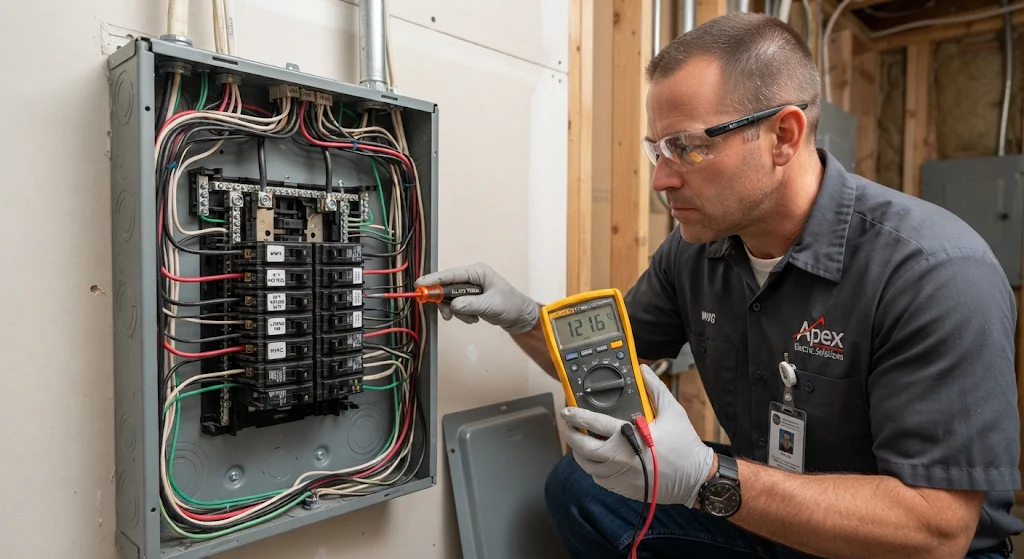
Expert Electrical Panel Upgrades Services in Bloomington, IL
When you require professional Electrical Panel Upgrades in Bloomington, safety, accuracy, and thorough code compliance are paramount. Electrical systems represent the hidden backbone of your property, powering everything from essential climate control and food preservation to high-speed communications and modern appliances. In Bloomington, projects frequently involve 200-amp main breaker panel replacements, subpanel additions, and whole-home surge protection in McLean County.
With the rapid addition of electric vehicle chargers, heat pumps, and finished basement suites, 100-amp service panels in established Bloomington neighborhoods are being pushed beyond safe operating limits.
Upgrading to a 200-amp panel ensures sufficient breaker space, compliant dual grounding rod installation, clean copper busbars, and whole-home Type 2 surge protective devices (SPDs).
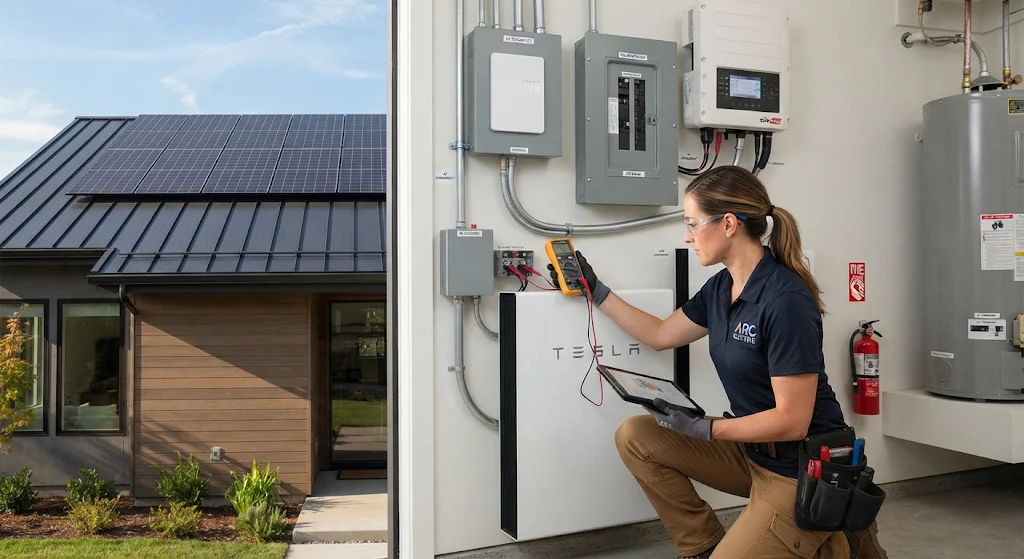
Technical Considerations & Codes in Bloomington
In Bloomington, electrical contracting is strictly regulated by local municipal building codes in conjunction with the adopted National Electrical Code (NEC / NFPA 70). Permitting and inspection protocols ensure that all branch circuits, panel busbars, overcurrent protective devices, and grounding systems are sized according to actual electrical loads.
Furthermore, coordination with local electric distribution utility Ameren Illinois is essential whenever work involves service disconnects, meter upgrades, or main line attachments. Independent contractors in the WATT911 network are familiar with Ameren Illinois technical requirements, ensuring efficient scheduling and minimal power interruptions.
Professional Standards & Code Compliance Requirements
Whether undertaking a minor diagnostic repair or an extensive system replacement, independent electricians prioritize safety protocols designed to eliminate shock hazards, equipment overload, and fire risks. Work in Bloomington complies with specific regional mandates, such as dedicated equipment grounding conductors, proper wire gauge selection based on continuous ampacity ratings, and the installation of arc-fault circuit interrupter (AFCI) and ground-fault circuit interrupter (GFCI) protection where required by code.
Additionally, licensed tradespeople provide thorough load calculations before connecting high-draw equipment—such as 240-volt charging stations, backup generator subpanels, or multi-circuit HVAC systems—guaranteeing that the upstream service entrance and breaker panel operate safely within their thermal ratings.
The Value of Working with Verified Independent Professionals
Attempting complex electrical repairs or installations without specialized diagnostic instruments and code certification poses severe hazards, including electrical fires, destructive short circuits, and compromised property insurance coverage. Professional electrical contractors maintain specialized testing tools—such as digital clamp meters, insulation resistance megohmmeters, and thermal imaging cameras—that allow them to identify latent issues that visual checks miss.
By connecting with an independent local contractor through WATT911, property owners in Bloomington benefit from direct communication with experienced tradespeople who understand the community's structural characteristics, local utility interconnection procedures, and inspection protocols. From upfront diagnostic assessments to final municipal sign-offs, independent contractors deliver reliable, code-compliant craftsmanship backed by individual contractor warranties.
Planning Your Electrical Project in Bloomington
Before beginning any major electrical project, it is advisable to assemble a comprehensive overview of your property's current demands and future expansion plans. Take inventory of aging appliances, planned basement or kitchen renovations, potential electric vehicle charging additions, or subpanel needs. Having these details ready enables the independent electrical contractor to perform accurate load calculations under Article 220 of the National Electrical Code and recommend a scope of work that protects your property for decades to come.
During on-site assessments in Bloomington, independent contractors evaluate service mast clearances, exterior meter socket conditions, main disconnect ratings, and grounding electrode conductor integrity (including ground rod resistance and water pipe bonding). Addressing these critical infrastructure elements simultaneously with your Electrical Panel Upgrades project saves substantial labor costs and prevents duplicate municipal permit filings, ensuring your electrical system delivers safe, long-term reliability.
Request Electrical Panel Upgrades in Bloomington, IL
Connect with an available independent electrical contractor specializing in Electrical Panel Upgrades today.
Transparent Contractor Relationship Disclosure
WATT911 operates transparently as an independent lead-generation and referral directory. We do not employ field electricians, perform electrical labor directly, or supervise on-site contractors. All diagnostics, estimates, installations, and warranties are issued directly by the independent licensed electrical contractor to whom your service inquiry is referred. This clear division of responsibility ensures you receive direct, professional service from verified local tradespeople.
Frequently Asked Questions: Electrical Panel Upgrades in Bloomington
While technically possible in homes with gas heat and appliances, an NEC load calculation is mandatory. Many homes require upgrading to 200 amps to safely accommodate a continuous 40-amp EV load.
Yes. The City of Bloomington Building Safety Division requires an electrical permit and inspection before utility service can be permanently restored.
A subpanel adds physical breaker spaces but draws power from the existing main service. A service upgrade increases total electrical capacity from the utility from 100A to 200A or 400A.
Recent editions of the National Electrical Code require whole-home surge protective devices (SPDs) on newly installed or upgraded residential service panels to protect electronics and appliances.